
Quick Answer: Do You Need a Nutrition Plan with GLP-1?
Yes. Here is why:
- GLP-1 medications suppress appetite but do not guide food quality or nutrient balance
- Without adequate protein, patients lose muscle mass along with fat — slowing metabolism
- Poor nutrition during GLP-1 therapy leads to fatigue, nutrient deficiencies, and stalled progress
- Patients without a nutrition plan are significantly more likely to regain weight after stopping the medication
- Combining GLP-1 with structured nutrition improves fat loss, preserves lean tissue, and sustains energy
A personalized nutrition plan is not optional — it is the foundation that makes GLP-1 therapy effective long term.
How GLP-1 Medications Work
GLP-1 receptor agonists — including semaglutide (the active ingredient in Ozempic and Wegovy) and tirzepatide (the active ingredient in Mounjaro and Zepbound) — mimic a naturally occurring hormone called glucagon-like peptide-1.
These medications work by:
- Slowing gastric emptying, so patients feel full longer
- Reducing appetite signals in the brain
- Improving insulin sensitivity and blood sugar regulation
- Decreasing cravings and impulsive eating patterns
The result is reduced caloric intake — often significant. But here is the critical point: reduced intake does not automatically mean improved nutrition. And that distinction matters enormously for outcomes.
Common Mistakes Patients Make on GLP-1 Therapy
Because GLP-1 medications suppress appetite so effectively, many patients fall into patterns that undermine their results:
- Eating too little — drastically low calorie intake leads to muscle loss and metabolic slowdown
- Skipping meals — especially breakfast and lunch, resulting in inadequate protein throughout the day
- Choosing convenience foods — low appetite does not mean the body needs less nutrition
- Ignoring protein — the single most important macronutrient during weight loss
- Not drinking enough water — dehydration is common and worsens side effects like nausea and constipation
These mistakes are understandable. When you are not hungry, it is easy to assume your body does not need fuel. But that assumption leads to the outcomes patients are trying to avoid: low energy, poor body composition, and eventual weight regain.
Why Eating Less Is Not the Same as Eating Correctly
Weight loss requires a caloric deficit — but the quality of those calories determines whether you lose fat or muscle, whether your metabolism adapts or crashes, and whether results last or reverse.
A patient eating 900 calories of processed carbohydrates is in a very different metabolic position than a patient eating 1,200 calories of lean protein, healthy fats, and fiber-rich vegetables — even though both are in a deficit.
The difference shows up in:
- Body composition (fat loss vs. muscle loss)
- Energy and daily function
- Hormonal stability
- Long-term metabolic rate
- Sustainability of results after stopping the medication
GLP-1 medications create the window of opportunity. Nutrition determines what happens inside that window.
Why Nutrition Matters During GLP-1 Therapy
Preserving Muscle Mass
Research shows that up to 40% of weight lost during rapid weight loss can come from lean muscle mass — not fat. This is especially true when protein intake is inadequate.
Muscle is metabolically active tissue. Losing it lowers your resting metabolic rate, making it easier to regain weight and harder to maintain results. Adequate protein intake — typically 0.7 to 1 gram per pound of ideal body weight — helps preserve muscle during GLP-1 therapy.
Maintaining Energy and Daily Function
Fatigue is one of the most commonly reported side effects of GLP-1 medications. In many cases, the fatigue is not caused by the drug itself — it is caused by insufficient calorie and nutrient intake.
When patients eat too little or skip meals, blood sugar drops, energy crashes, and cognitive function suffers. A structured nutrition plan ensures patients consume enough fuel to function well while still losing weight effectively.
Improving Fat Loss vs. Weight Loss
The goal of medical weight loss is not simply to weigh less. It is to reduce body fat while maintaining lean tissue, strength, and metabolic health.
Without proper nutrition, the scale may move — but the body composition may not improve. Patients who prioritize protein and nutrient-dense foods consistently achieve better fat-to-muscle loss ratios and better long-term outcomes.
Preventing Weight Regain
One of the biggest concerns with GLP-1 therapy is what happens when patients stop the medication. Studies have shown that patients who lose weight without building sustainable eating habits regain a significant portion of weight within 12 months.
A nutrition plan is not just about optimizing weight loss during treatment — it is about building habits that last after the medication is discontinued.
Practical Nutrition Guidance for GLP-1 Patients
Nutrition during GLP-1 therapy does not need to be complicated. The fundamentals are straightforward and sustainable.
Prioritize Protein at Every Meal
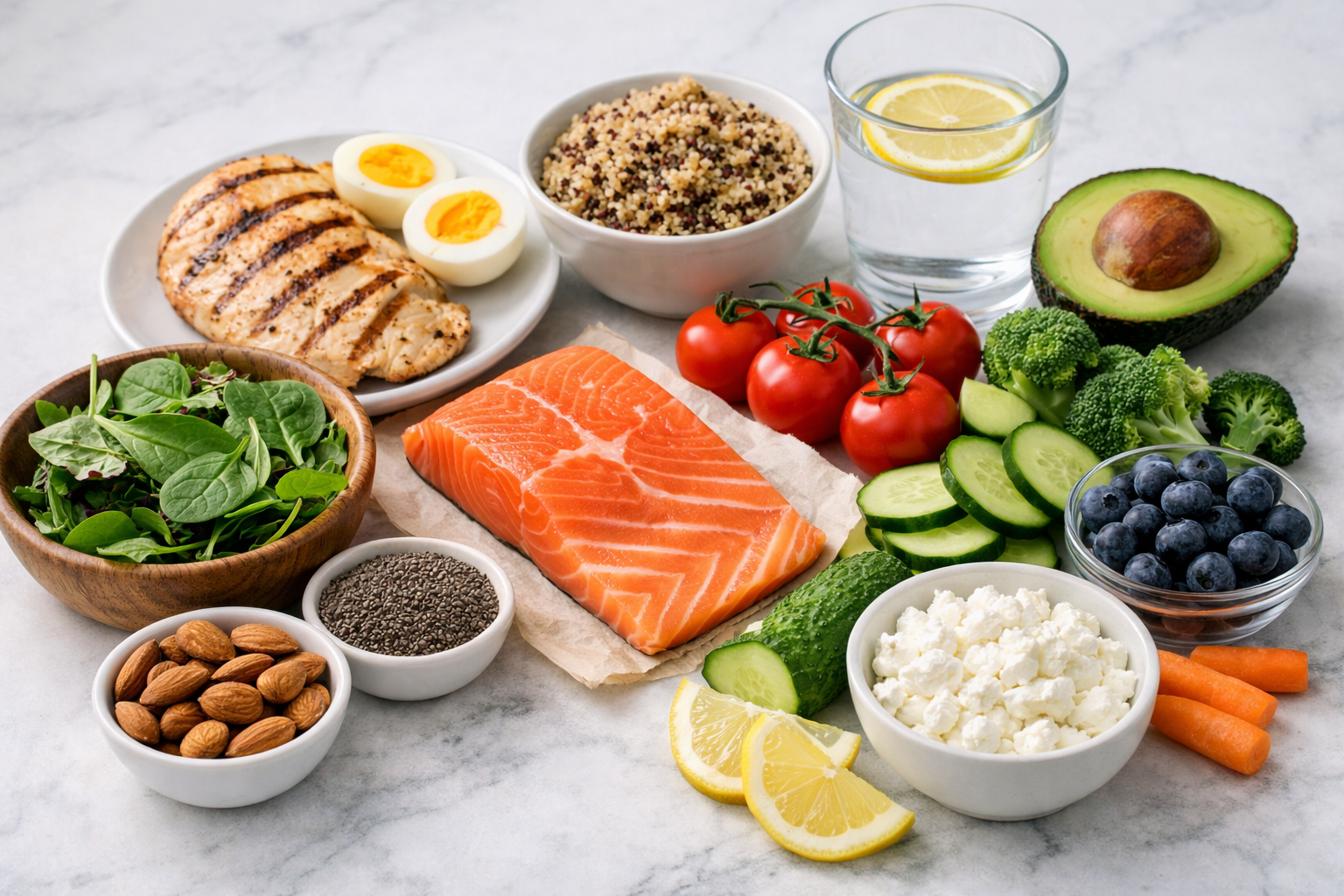
Protein should be the anchor of every meal. Aim for at least 30 grams per meal from sources like:
- Chicken, turkey, and lean meats
- Fish and seafood
- Eggs and egg whites
- Greek yogurt and cottage cheese
- Plant-based options like lentils and tofu
When appetite is low, protein shakes or collagen supplements can help patients meet their daily targets.
Stay Hydrated
Dehydration is extremely common on GLP-1 medications and contributes to nausea, constipation, and fatigue. Patients should aim for at least 64 to 80 ounces of water daily — more if active.
Electrolyte supplementation may also be helpful, especially during the first weeks of treatment.
Focus on Consistency, Not Perfection
The goal is not a rigid diet. It is a consistent pattern of nutrient-dense eating that supports the body during weight loss. Three balanced meals with adequate protein will outperform any extreme restriction plan.
Limit Ultra-Processed Foods
Processed foods are calorie-dense and nutrient-poor. When appetite is already reduced, every bite counts. Choosing whole, minimally processed foods ensures patients get the vitamins, minerals, and macronutrients their body needs from a smaller volume of food.
Simple Nutrition Rule of Thumb for GLP-1 Patients
When appetite is reduced on GLP-1 medications, what you eat becomes more important than how much you eat.
A simple, effective framework:
Prioritize Protein First
Aim for approximately 0.7 to 1.0 grams of protein per pound of body weight per day.
This helps:
- Preserve lean muscle
- Support metabolism
- Improve body composition during weight loss
Do Not Eliminate Carbohydrates
Carbohydrates are not the enemy — especially during GLP-1 treatment.
They play an important role in:
- Energy levels
- Brain function
- Preventing fatigue
Focus on:
- Whole, unprocessed sources
- Fruits, vegetables, and complex carbs
Balance Is the Goal
The most effective approach is not extreme restriction.
Protein-focused, balanced nutrition that supports your body while weight is decreasing.
The Unscripted Approach to GLP-1 Weight Loss
At Unscripted Functional Aesthetic Medicine in Addison, Texas, medical weight loss is not a prescription and a follow-up in three months. It is a structured, medically guided program built around each patient.
Our GLP-1 programs include:
We serve patients throughout Addison, North Dallas, Plano, Frisco, Carrollton, and Richardson who want more than a prescription — they want a partner in their health.
Who This Is For
This approach to GLP-1 weight loss may be right for you if:
- You are considering semaglutide or tirzepatide and want to start with a complete plan
- You are already on GLP-1 therapy but feel fatigued, stuck, or unsure about nutrition
- You have tried online weight loss programs and want more personalized medical oversight
- You want to lose fat — not just weight — and protect your metabolism
- You are looking for a medical weight loss clinic in Addison, Frisco, Plano, or North Dallas that treats the whole picture
- You want a provider who adjusts your plan as your body changes, not one who sets it and forgets it
Key Takeaways
- GLP-1 medications reduce appetite but do not replace the need for a nutrition plan
- Without adequate protein, patients lose muscle mass — not just fat
- Fatigue, stalled progress, and nutrient deficiencies are common without dietary guidance
- Eating less is not the same as eating correctly — food quality determines outcomes
- Sustainable habits built during GLP-1 therapy are what prevent weight regain after stopping
- A personalized, medically guided program produces better body composition and long-term results than medication alone
- Protein intake, hydration, and consistency are the three pillars of GLP-1 nutrition
Frequently Asked Questions
Explore More
Ready for a Weight Loss Plan That Actually Works?
At Unscripted Functional Aesthetic Medicine, GLP-1 therapy comes with the guidance, monitoring, and nutrition support that make results last. If you are in Addison, Frisco, Plano, or North Dallas, we would love to build a plan around you.